Quick Answer Visiting Luxor Temple at night is worth it because the illuminated columns, colossal statues of Ramses II and the Avenue of Sphinxes glow against the dark sky, temperatures are cooler and the crowds thinner. The temple usually stays open into the evening, making it one of the few major Egyptian sites you can explore after sunset. |
Many temples in Egypt close in the late afternoon, but Luxor Temple is different. As the sun sets, warm lights switch on and the sandstone turns gold against a deep blue sky. This guide explains why an evening visit is so special, what to see, Luxor Temple opening hours and how to take great photos after dark.
Key Takeaways
- Luxor Temple stands in the center of Luxor on the East Bank, beside the Nile Corniche.
- It is typically open from early morning until late evening, though hours vary by season.
- Evening visits are cooler, quieter and ideal for photography.
- The Avenue of Sphinxes links Luxor Temple to Karnak, about 2.7 km away.
- The sound and light show in Luxor takes place at Karnak, not at Luxor Temple.
A Short History of Luxor Temple
Luxor Temple, known in ancient times as Pet-Rest, "the southern sanctuary", was built mainly by Amenhotep III around 1390 BC and later expanded by Ramses II. Unlike many temples, it was not dedicated to a king's cult after death but to the rejuvenation of royal power and to the Theban Triad of Amun, Mut and Khonsu.
During the annual Opet Festival, statues of the gods were carried from Karnak to Luxor Temple in a grand procession. Over the centuries the temple was used by Alexander the Great, who built a shrine inside, by the Romans, who turned part of it into a military chapel, and by Christians and Muslims. The Mosque of Abu el-Haggag, still active today, sits on top of the temple's courtyard.
Why Visit Luxor Temple at Night?
The lighting transforms the temple
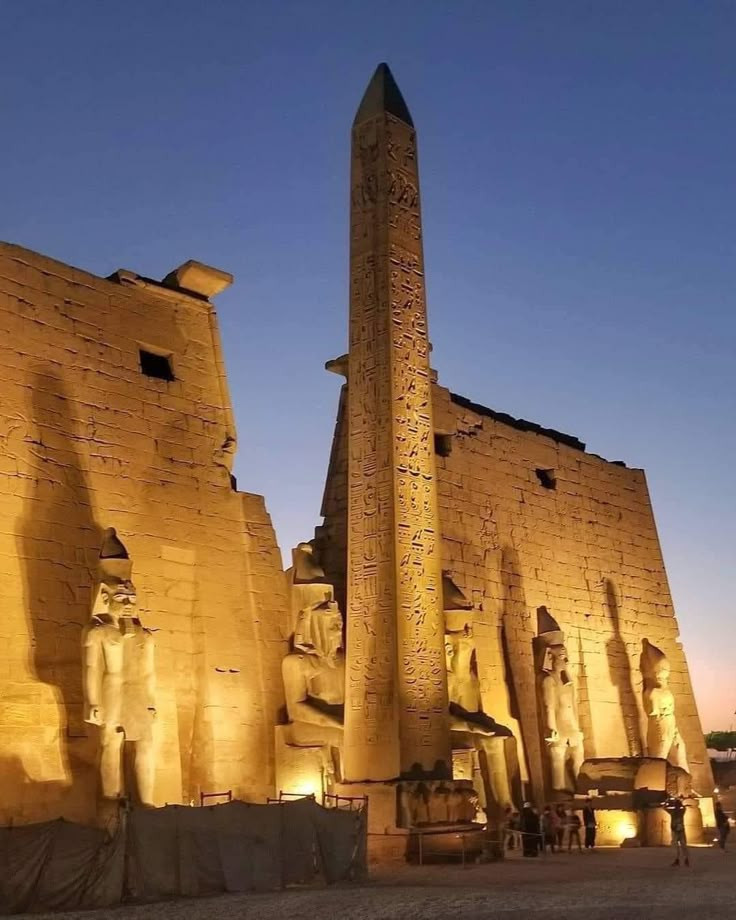
When Luxor Temple illuminated at night comes into view, the effect is unforgettable. Spotlights pick out the carved reliefs, throw long shadows between columns and highlight the faces of the statues. Details that disappear in harsh midday light suddenly stand out.
Cooler temperatures
Even in winter, midday in Luxor can be hot. In the evening, temperatures drop, making a relaxed one-hour walk much more comfortable, especially from April to October.
A calmer atmosphere
Most large tour groups visit in the morning. After dark, you often share the courtyards with far fewer people, and the atmosphere becomes almost meditative.
A perfect end to the day
On a Nile cruise, Luxor Temple is often visited after Karnak. Ending the day here at sunset is the ideal way to round off the East Bank tour.
What to See at Luxor Temple After Dark
| Highlight | Why It Matters |
|---|---|
| Avenue of Sphinxes | Lined with human-headed sphinxes, beautifully lit at night |
| The First Pylon and obelisk | Built by Ramses II; its twin obelisk has stood in Paris's Place de la Concorde since 1836 |
| Colossal statues of Ramses II | Seated and standing figures guarding the entrance |
| Court of Ramses II | Papyrus columns and statues between them |
| Colonnade of Amenhotep III | Fourteen giant columns, stunning when illuminated |
| Sun Court of Amenhotep III | Elegant double rows of papyrus columns |
| Roman chapel | Rare Roman wall paintings on top of older reliefs |
| Shrine of Alexander the Great | Reliefs showing Alexander as an Egyptian pharaoh |
Luxor Temple Opening Hours
Luxor Temple is generally open from around 6 am until about 9 or 10 pm, with the last entry roughly an hour before closing. Opening hours can change by season and during Ramadan, so confirm locally or with your guide before you go. The same ticket applies for day and evening visits; there is no separate night ticket.
Luxor Temple Sound and Light: What to Know
Many travelers search for the Luxor Temple sound and light show, but in Luxor the show actually takes place at Karnak Temple. It combines a guided walk through the illuminated complex with narration and music, finishing with seating beside the Sacred Lake. Visiting Luxor Temple at night and attending the Karnak show on another evening makes a great combination.
Photography Tips for Luxor Temple at Night
- Arrive just before sunset to capture the blue hour, when the sky still has color.
- Use a steady hand or a small support; large tripods may require permission.
- Shoot along the Colonnade for dramatic lines of light and shadow.
- Turn off your flash; it flattens the reliefs and disturbs others.
- Try night mode on your phone, which works well with the bright lighting.
Practical Tips
- Allow about 60 to 90 minutes.
- Wear comfortable shoes; the ground is uneven in places.
- Bring a light jacket in winter, as evenings can be cool.
- Respect the Abu el-Haggag Mosque and dress modestly.
- Walk a section of the Avenue of Sphinxes afterward for a peaceful evening stroll.
Experience Luxor After Dark
Our Luxor itineraries are timed so you can enjoy Luxor Temple in the best light. Read our Karnak Temple guide, explore our Nile cruises or contact us to plan an evening visit.