Quick Answer The Aswan High Dam is a massive rock-fill dam across the Nile at Aswan, built between 1960 and 1970. It ended the annual Nile flood, created Lake Nasser, one of the largest artificial lakes in the world, and generates hydroelectric power. Its construction also flooded historic Nubia, displacing tens of thousands of Nubians and requiring the rescue of monuments such as Abu Simbel and Philae. |
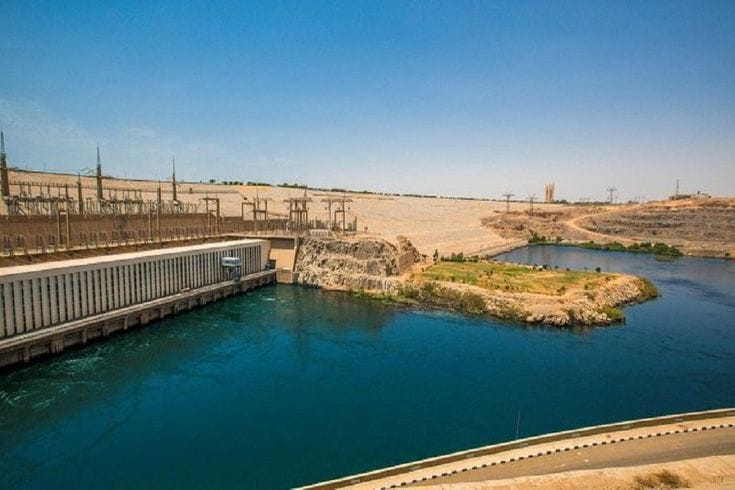
On most Nile cruises, the Aswan High Dam is the first or last stop in Aswan. At first glance it looks like a wide road across the river, but standing on top you see two worlds: Lake Nasser stretching to the horizon on one side and the narrow Nile Valley on the other. This guide explains Aswan dam history, its impact on Egypt and the Nubian people, and what to expect on your visit.
Last updated: October 2026
Key Takeaways
- There are two dams at Aswan: the Low Dam (completed 1902) and the High Dam (completed 1970).
- The High Dam is about 3.8 km long and 111 meters high.
- Lake Nasser stretches around 500 km south, into Sudan, where it is called Lake Nubia.
- The dam's hydroelectric plant has a capacity of about 2,100 megawatts.
- The Nubian relocation Aswan dam projects affected an estimated 100,000 people in Egypt and Sudan.
Aswan Dam History
For thousands of years, Egyptian life depended on the Nile flood. Each summer, rains in the Ethiopian Highlands swelled the river, which spilled over its banks and left fertile silt behind. A good flood meant plenty; a poor one meant famine; an extreme one meant destruction.
The British built the first Aswan Dam, now called the Low Dam, in 1902, and raised it twice. It helped, but it could not store enough water to control the river year to year.
After the 1952 revolution, President Gamal Abdel Nasser made a new, much larger dam a national priority. When Western funding was withdrawn in 1956, Egypt nationalized the Suez Canal to finance the project, triggering the Suez Crisis. The Soviet Union then provided financial and technical support. Construction began in 1960, the dam was completed in 1970, and it was officially inaugurated in 1971.
| Fact | Detail |
|---|---|
| Construction | 1960–1970 |
| Length | About 3.8 km |
| Height | About 111 m |
| Base width | Close to 1 km |
| Reservoir | Lake Nasser (Lake Nubia in Sudan) |
| Lake length | Around 500 km |
| Power capacity | About 2,100 MW |
What the High Dam Changed
Benefits
- Flood control: Egypt was protected from destructive floods and severe droughts.
- Year-round irrigation: farmers could grow two or three crops a year.
- Electricity: at the time of completion, the dam supplied a large share of Egypt's power.
- Navigation: a stable river level allows Nile cruises to sail all year.
Drawbacks
- Loss of silt: fertile sediment is now trapped in Lake Nasser, so farmers rely on fertilizers.
- Coastal erosion: the Nile Delta receives less sediment, contributing to erosion.
- Evaporation: large volumes of water evaporate from the lake surface in the desert heat.
- Cultural loss: ancient Nubian lands and villages were submerged.
Lake Nasser
Lake Nasser is one of the world's largest artificial lakes. Its shores are mostly desert, but the lake supports fishing communities, birdlife and a small population of Nile crocodiles. A few small cruise ships sail the lake between Aswan and Abu Simbel, visiting rescued temples such as Kalabsha, Amada and Wadi el-Seboua.
Nubian Relocation and the Rescue of Monuments
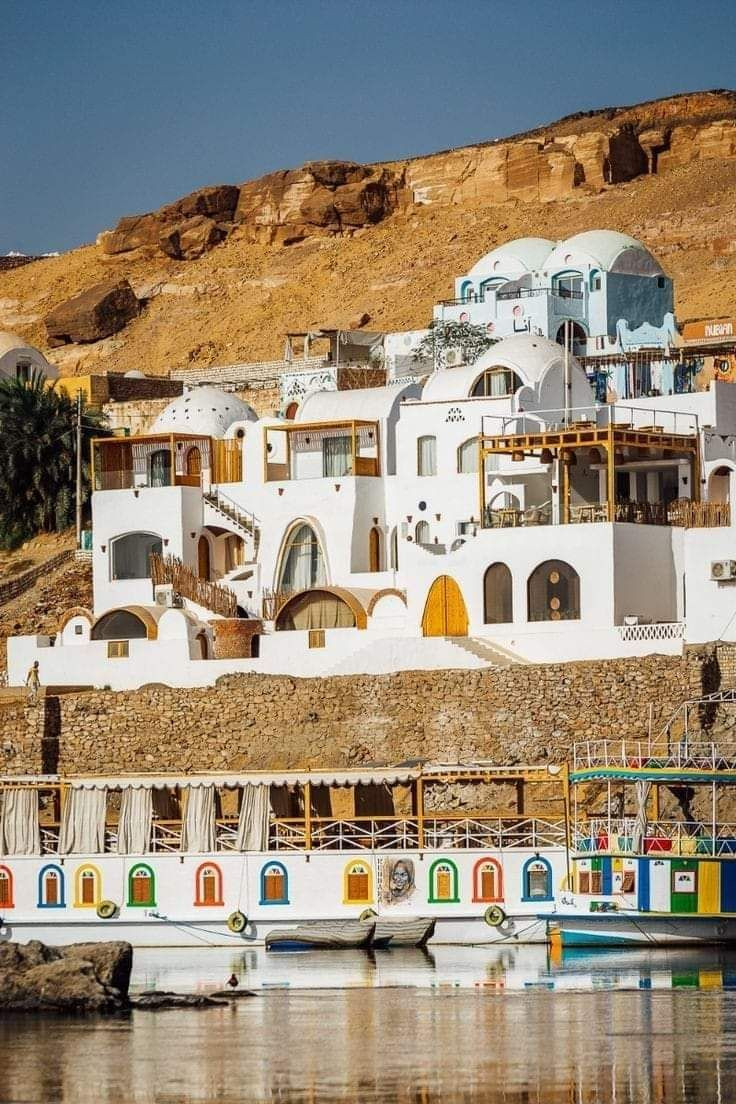
Nubia, the land along the Nile between Aswan and northern Sudan, had been home to the Nubian people for thousands of years. The rising waters of Lake Nasser covered their villages, fields and graves. Nubians were resettled in new villages, many around Kom Ombo, often far from the river that had shaped their culture. For many families, the loss of their homeland remains painful.
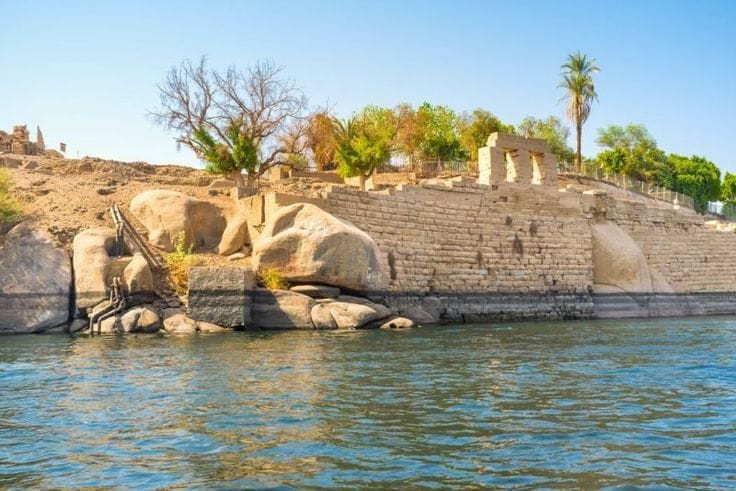
At the same time, UNESCO launched an international campaign to save Nubia's ancient monuments. The temples of Abu Simbel were cut into blocks and moved to higher ground between 1964 and 1968, and Philae was moved to Agilkia Island. Several temples were also given to countries that helped, including the Temple of Dendur, now in New York.
Visiting the Aswan High Dam
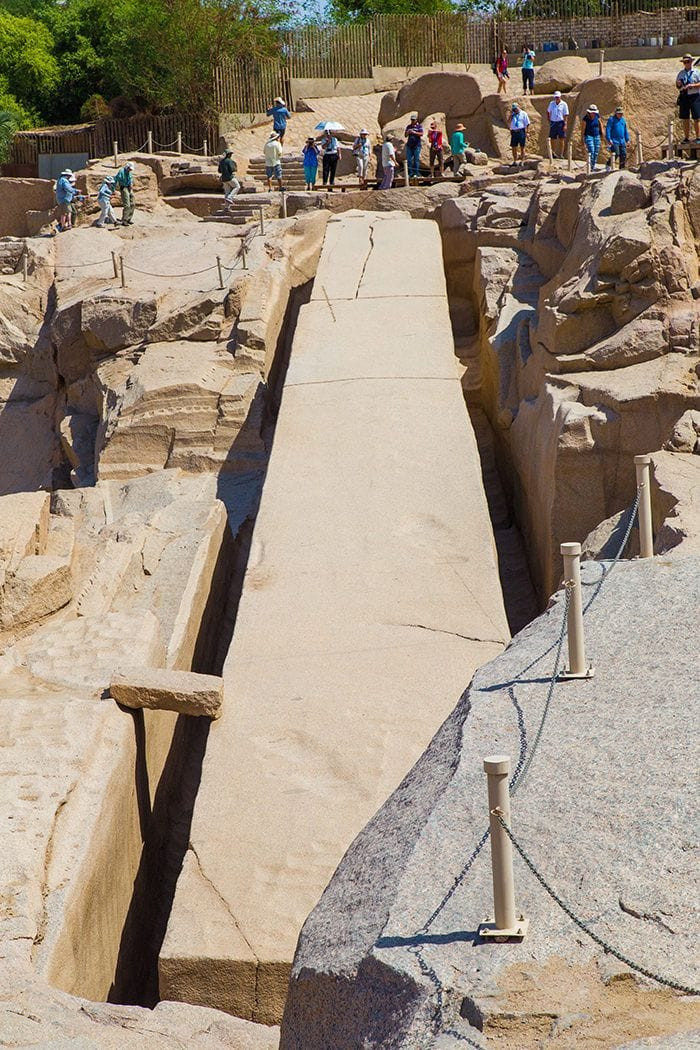
The visit usually lasts 20 to 30 minutes. From the top you can see Lake Nasser on one side and the Nile on the other. Look for the Lotus Flower monument, a tall tower symbolizing Soviet-Egyptian cooperation. Security is strict: drones are forbidden, and photography rules may vary, so follow your guide's advice. The High Dam is usually combined with Philae Temple and the Unfinished Obelisk.
For a deeper understanding, ask your Egyptologist to explain the contrast between the two sides of the dam: the vast blue reservoir upstream and the controlled river below. Travelers who want to explore Lake Nasser further can join a multi-night Lake Nasser cruise or take a day trip to Abu Simbel, both of which show how the dam reshaped southern Egypt.
See Aswan with an Egyptologist
The High Dam, Philae and the Unfinished Obelisk are included in our Aswan tours. Read about Philae Temple, explore our Nile cruises or contact us.